

FROM HILLTOP TO HIGH RANKS: How Kabale University is reshaping Uganda’s Higher Education Landscape
Kabale University has officially climbed to the 4th position in Uganda and surged 731 places globally in the latest Webometrics University Rankings. This places the university directly behind Makerere University, Kampala International University, and Mbarara University of Science and Technology. The Webometrics University Rankings assess institutions based on various criteria, including their online presence, impact, and openness. These factors encompass the volume and quality of web content, the visibility of research outputs, and the accessibility of academic resources. Kabale University’s significant rise reflects its efforts to improve digital engagement and academic influence both locally and internationally.
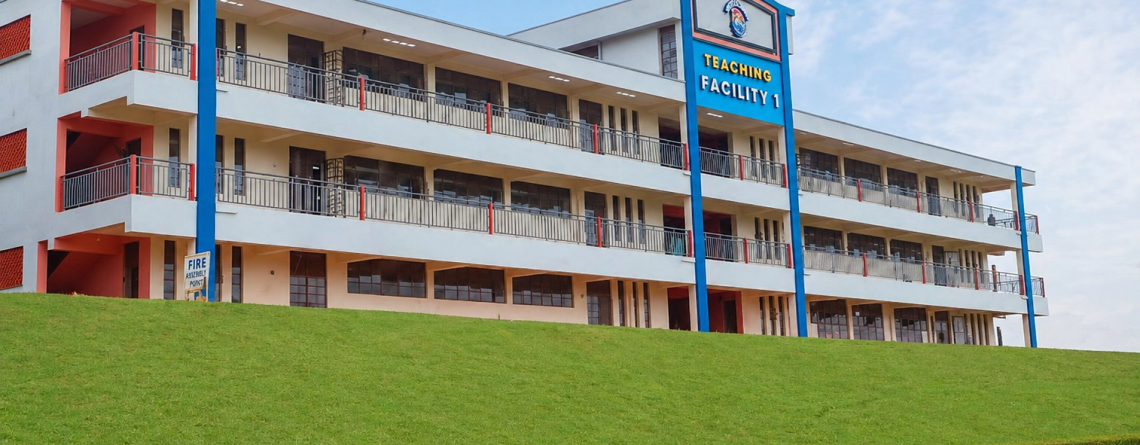
The meteoric rise of the institution, nestled on Kikungiri Hill in Kabale Municipality, represents a massive tectonic shift in Uganda’s higher education matrix. This momentum signals stronger collaboration with regional research networks and enhanced student exchange opportunities. As the university engages in more projects and scholarly work across the continent and in the global space, it is poised to attract and drive more innovation in science and technology. The rise is also a testament to education quality in the region.
To appreciate Kabale University’s current breakthrough, one has to examine its historical tapestry which is linked to the historical landscape of tertiary education in the country. Higher education in Uganda began in 1922 with the founding of Makerere University as a technical school. It evolved into the premier University of East Africa. For over 60 years, Makerere stood as the sole beacon of university-level learning in the country and region with a heavily centralized and largely government-supported system.
The early 1980s and 1990s brought an inevitable breaking point. A surging population and an influx of secondary school graduates created an overwhelming demand for higher learning that a single public institution could no longer satisfy. The subsequent liberalization of the sector gave birth to a dual system divided into the public and private spheres.
This liberalization created two distinct pathways for higher learning in Uganda, each with its own structural advantages and challenges. In this crowded arena, institutional survival no longer depends on historical prestige alone. It relies on digital infrastructure, globally accessible research, and technological adaptability. This is precisely where Kabale University has carved out its competitive edge, bridging the gap between both worlds.
Kabale University’s exceptional trajectory over the last few years is not an accident; it is the result of three powerful institutional catalysts. The transition from a struggling private entity to a public university unlocked vital state resources. Increased government funding has transformed the physical and academic infrastructure of Kikungiri Hill. State capitation grants, the inclusion of Kabale students on the government national merit sponsorship scheme, and direct state funding for staff salaries have stabilized the university’s economy. This financial backing allowed the university to recruit high-caliber PhD holders and top-tier professors, directly driving up its global research footprint.
Solving Contemporary Regional Problems
Rather than operating as an isolated academic ivory tower, Kabale has anchored its research around solving local and global challenges. Situated near the borders of Rwanda and the Democratic Republic of Congo, the university spearheads research in cross-border trade, public health epidemics, and sustainable hillside agriculture.
Furthermore, the university has secured massive wins in cutting-edge technological fields. It was recently selected to host Uganda’s official National Artificial Intelligence Node under the East African Regional AI Network (AI4EAC). By focusing on smart agriculture and climate change mitigation for smallholder farmers, the university’s research has become highly cited globally, rocketing them up the webometric ladder.
Continental Dominance in Medicine
Perhaps the most stunning testament to the quality of education now offered by Kabale University and Uganda at large is the unrivalled dominance of the Kabale University School of Medicine (KABSOM).
In an extraordinary academic feat, the Kabale University Medical Students’ Association (KUMSA) secured its third consecutive continental victory at the FAMSA Africa Inter-MSA Medical Quiz. Organized by the Federation of African Medical Students’ Associations (FAMSA) in partnership with Lecturio International, the highly prestigious competition brought together over 40 top-tier medical schools from across the African continent.
By successfully defending their gold title against elite continental institutions three years in a row, Kabale’s medical students have proven that the university provides world-class clinical mentorship and academic rigor.
Unlike older public entities built entirely by state decree, Kabale University shares a unique history of community incubation. It was founded in 2001 by a dedicated group of stakeholders from the Kigezi region. The founders envisioned an institutional centerpiece capable of serving the unique geopolitical realities of Southwestern Uganda and the wider Great Lakes region.
- 2002: The school opened its doors as a private institution to a modest pioneer class of just 42 students.
- 2014: The university achieved a major legal milestone when it was granted a formal charter by the National Council for Higher Education.
- 2015: Recognizing its immense value, the Uganda Government officially took over the institution. This historic move turned Kabale into the first-ever private university converted into a public university in Ugandan history.
A Story of Hard Work and Progress
For an institution that opened its doors with a mere 42 students on the misty hills of Kigezi, its current expansive layout is a profound testament to hard work, relentless commitment, and undeniable progress. The university has steadily grown its academic program offerings to cater for both undergraduate and advanced postgraduate scholars.
The crowning achievement of this systematic growth was recently realized when Kabale University celebrated the graduation of its pioneering Doctor of Philosophy (PhD) students. Moving from basic certificates to awarding the highest level of academic degrees signifies that the university has fully matured into a powerhouse of knowledge generation. It is no longer just teaching existing knowledge; it is actively creating original knowledge through doctoral research, adding immense weight to its national academic standing.
Kabale University’s exceptional trajectory over the last few years is not an accident; it is the result of three powerful institutional catalysts:
The transition from a struggling private institution to a public university unlocked vital government resources. Increased state funding has transformed Kikungiri Hill’s physical and academic infrastructure. State capital grants, the inclusion of Kabale students on the government’s national merit sponsorship scheme, and direct state funding for staff salary among others have stabilized the university’s economy. This financial backing allowed the university to recruit high-caliber PhD holders and top-tier professors, which in turn helped to build up its global research footprint.
Kabale University has aggressively expanded from its humble beginnings as a humanities college. It has systematically rolled out a wide array of competitive academic programmes across the following science faculties.
- Kabale University School of Medicine
- Faculty of Engineering, Technology, Applied Design and Fine Art
- Faculty of Computing, Information and Library Science
- Faculty of Agriculture and Environmental Sciences
This comprehensive expansion has attracted a massive wave of scholars, pushing total enrollment numbers past 5,450 active students in recent admissions cycles.
Rather than operating as an isolated academic ivory tower, Kabale has anchored her research around solving local and global challenges. Situated near the borders of Rwanda and the Democratic Republic of Congo, the university spearheads research in cross-border trade, public health epidemics, and sustainable hillside agriculture. Furthermore, the university has secured massive wins in cutting-edge technological fields. It was recently selected to host Uganda’s official National Artificial Intelligence Node under the East African Regional AI Network (AI4EAC). By focusing on smart agriculture and climate change mitigation for smallholder farmers, the university’s research has become highly cited globally, rocketing them up the webometric ladder.
True academic success is measured on the ground rather than on paper. Any university should be tested by the impact it creates through its interventions made by staff and students in solving contemporary problems. The rise in ranking is an indicator of growth in the right direction, validating a hands-on approach to research, societal transformation, and innovation.
Publishing Powerhouses: The Role of Global Scholarly Resources
Central to this growth is where Kabale University’s faculty publishes. Staff members have been actively pushing original research out through specialized institutional homegrown research platforms such as the Africa Journal of Language Studies (AJLS) and the Frontiers in Multidisciplinary Research Journal. These journals, curated alongside the public Kabale University Digital Repository (KABDR), capture localized scientific breakthroughs and broadcast them to an international audience.
However, the real global heavy lifting happens via peer-reviewed index engines. External evaluation resources like Scimago Institution Rankings (SIR), Scopus, and the Nature Index are now central to how universities are ranked worldwide. Databases like Scimago closely monitor metrics like citation equity, innovation percentile, and societal impact. By publishing rigorous, peer-reviewed science that gets tracked on these elite indices, Kabale’s faculty have elevated the school’s global standing, helping it maintain strong scores with minimal institutional self-citation risks.
The data-driven Cybermetrics Lab of the Spanish National Research Council (CSIC) tracks international university domains every six months. Its findings show that Kabale University’s ascent has been a steady, deliberate climb over multiple consecutive tracking cycles.This measured progress reflects sustained investments in digital infrastructure, faculty development, and targeted outreach. As Kabale University expands its online presence and collaboration networks, its ranking gains may accelerate, drawing researchers and students from regional hubs and strengthening its global academic profile.
Kabale University Webometrics Rankings (2024–2026)
| Evaluation Period | Uganda National Rank | Africa Continental Rank | Global World Rank | Progress Notes |
| July 2026 | #4 | #109 | #4,310 | Achieved a historic institutional peak, jumping 731 global places. |
| January 2026 | #9 | #204 | #7,210 | Adjusted globally following shifts in regional research reporting visibility. |
| July 2025 | #6 | #133 | #5,041 | Entered Uganda’s top 6 universities for the first time. |
| January 2025 | #9 | #142 | #5,035 | Remained positionally stable while structuring internal digital repositories. |
| July 2024 | #7 | #164 | #5,131 | Formed the baseline configuration ahead of the university’s multi-year surge. |
While multiple ranking bodies exist, Webometrics remains widely regarded as the largest and most reputable global ranking body for higher education institutions. It evaluates over 31,000 universities worldwide Webometrics focuses on data transparency, open access, and electronic consumption of academic materials. The Webometrics algorithm aligns with testable parameters such as Web Impact and Visibility, Research Excellence. This is sourced via Scopus and counts scientific papers ranking within the top 10% of the most highly cited scholarly articles across 27 distinct disciplines. Openness and Transparency that tracks the openness of institutional profiles by tallying the total citation counts of top academic researchers on Google Scholar Citations.
As the university transitions through leadership changes including the legacy celebrations of outgoing Vice-Chancellor Prof. Joy C. Kwesiga and the installation of Hon. Canon Mathew Rukikaire as Chancellor the institutional path forward remains clear. By leaning into global technological nodes, state-backed financial resources, and community-driven regional research, Kabale University has proved that geographical distance from the capital city of Kampala is no barrier to world-class academic excellence.
Discover more from Kabale University News
Subscribe to get the latest posts sent to your email.

Leave a Reply