

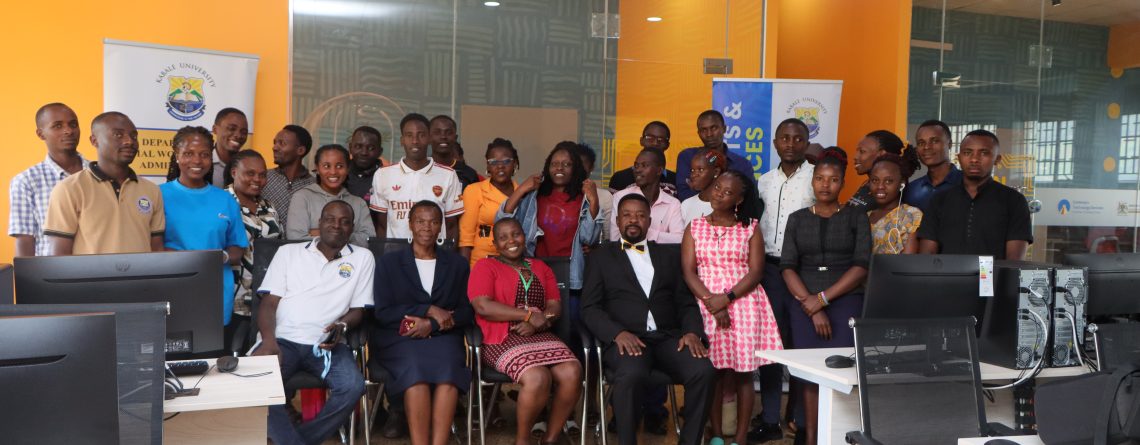
Kabale University Hosts Inspiring Dialogue on “Culture and Development”
 The Department of Culture and Heritage Studies at Kabale University, under the leadership of Dr. Ruth Tibesasa, on May 15, 2026, successfully convened a sensitization meeting themed “Culture and Development” at the MTN HUB, Kabale University.
The engagement brought together staff, students, and scholars from various disciplines to examine the critical role culture plays in shaping sustainable development and transforming societies. The sensitization sought to explore how cultural values, practices, and heritage can be harnessed as drivers of sustainable development, foster interdisciplinary dialogue between Culture, Social Sciences, and Economics, and sensitize participants on the role of cultural perspectives in policy formulation, community development, and economic planning.
In his opening remarks, the Dean of the Faculty of Social Sciences, Prof. Edward Wamala, reflected on Francis Fukuyama’s influential work Trust: The Social Virtues and the Creation of Prosperity (1995), emphasizing that trust—an intangible form of cultural heritage—is a fundamental pillar for development across all sectors of society.
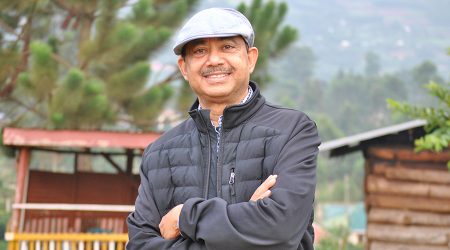
The keynote speaker, Mr. Patrick Kagambo John Nahabwe, a seasoned Economist and Educator, delivered a thought-provoking presentation that challenged conventional understandings of development.
“Culture is no longer decoration. Culture is now economics, diplomacy, tourism, security, branding, geopolitics, and power,” he remarked.
Drawing examples from across the globe, Mr. Nahabwe highlighted how Japan’s discipline and collective responsibility, Rwanda’s Umuganda community work, and South Korea’s investment in culture and education have significantly contributed to economic transformation and national progress.
He further reminded participants of the resilience and industriousness historically demonstrated by Bakiga communities, who transformed steep hills into productive farmlands through terracing, hard work, and collective labor. He challenged attendees to revive these cultural strengths as valuable assets for contemporary development.
The keynote address also underscored the economic potential of heritage preservation. Mr. Nahabwe cited the World War II Pyrenees escape routes, now transformed into heritage tourism sites, as an example of how historical narratives can drive local economies. He encouraged the documentation and preservation of Kigezi’s own historical experiences, including anti-colonial struggles, Nyabingi resistance movements, and liberation histories.
In his concluding remarks, Mr. Nahabwe called upon universities to rethink development education by integrating culture, innovation, and sustainability into academic discourse.
“Development is not only econometrics and budgets. It is also identity, storytelling, heritage, and belonging. The future development expert must combine economics, culture, digital innovation, and environmental sustainability,” he said.
He left participants with a memorable charge:
“May we preserve our culture not as ashes of the past, but as fire for the future.”
The sensitization meeting reaffirmed Kabale University’s commitment to promoting interdisciplinary scholarship and positioning culture and heritage as central pillars in sustainable development and community transformation.
Discover more from Kabale University News
Subscribe to get the latest posts sent to your email.









Leave a Reply