
Kabale University Celebrates International Day of Mathematics, Inspires Students to Embrace Problem Solving and Innovation
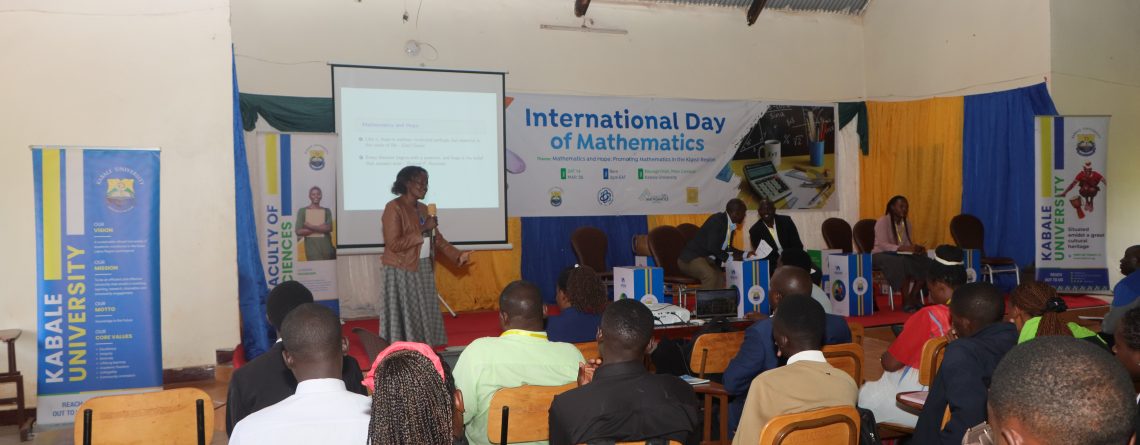
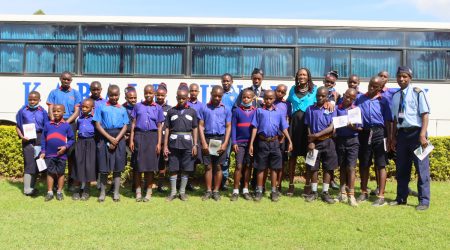
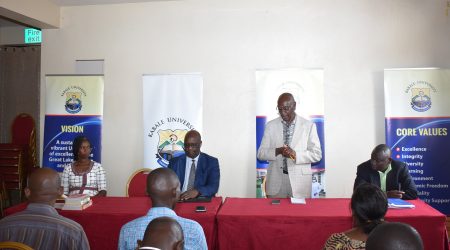
 Kabale University joined secondary schools from across the Kigezi region to celebrate the International Day of Mathematics on 14th March 2026 at the Kikungiri Main Hall, under the global theme “Mathematics and Hope.” The regional celebration was guided by the sub-theme “Promoting Mathematics in the Kigezi Region.”
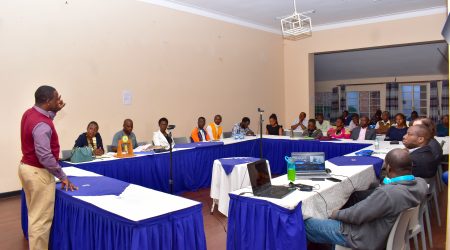
The event brought together mathematics lecturers, students and secondary school teachers and learners to reflect on the importance of mathematics in solving real-world challenges and inspiring the next generation of innovators and problem solvers.
Speaking at the event, Dr. Namayanja Proscovia, Associate Dean, Faculty of Science, emphasized that mathematics plays a central role in everyday life and provides solutions to many of the world’s challenges.
“There is no subject that covers all aspects of life like mathematics. There is always hope in mathematics because every problem has a solution and students of mathematics are problem solvers,” she noted.
Dr. Namayanja encouraged students to prepare themselves for the competitive world of work by acquiring diverse skills beyond academic performance. She explained that while achieving high academic grades is important, success in modern careers requires additional competencies such as communication skills, time management, integrity and teamwork.
“Educational knowledge is only the foundation. Students must develop transferable skills that can be applied across different fields,” she added, urging learners to remain patient, motivated, and open to continuous learning and networking.
Dr. Sarah Nakato, Head of the Department of Mathematics, highlighted the importance of international collaborations in strengthening mathematics education. She noted that International Day of Mathematics is organized by the International Mathematical Union, which also supports global academic exchanges and conferences that enrich both teachers and students.
Meanwhile, Mr. Kansiime Geoffrey, Head of the Department of Science Education, underscored the ongoing transformation in mathematics education through the Competency-Based Curriculum (CBC). He explained that the curriculum focuses on developing practical skills rather than relying solely on examinations.
“Mathematics teaching should aim at developing competencies in problem solving, critical thinking, creativity, communication and collaboration,” Mr. Kansiime said.
He encouraged teachers and lecturers to involve learners in group work, project-based learning and active discussions that allow students to explain their reasoning and apply knowledge to practical situations.
 Also addressing participants, Dr. Damian Kajunguri highlighted the wide-ranging applications of mathematics in sectors such as security, healthcare and data analysis, explaining that mathematical tools such as graphs, charts, and tables help transform complex information into clear insights for decision-making.
Teachers and students from participating secondary schools shared similar sentiments. Tr. Akakwasa Flavia from St. Joseph’s Mparo Secondary School in Rukiga District described mathematics as a powerful tool for solving everyday problems and supporting project-based learning under the new curriculum.
“Mathematics helps transform negatives into positives, and learners are succeeding because they are committed to it,” she said.
Masereka Allan, a third-year student pursuing a Bachelor of Education in Physics and Mathematics at Kabale University, encouraged fellow students not to fear mathematics.
“Many people think mathematics is difficult, but it is simply about solving problems. Every challenge has a solution if you think critically and remain focused,” he said.
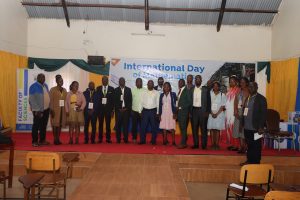 A key highlight of the event was the official launch of the Kabale University Mathematics Enthusiasts Association, a student-led platform aimed at promoting interest and excellence in mathematics. The association will be headed by Badru Ddamulira, who pledged to work with fellow students to build a strong culture of innovation, collaboration, and continuous learning.
Participating schools included Kigezi High School, Kabale Secondary School, Rock High School, St. Joseph’s Mparo Secondary School (Rukiga), Solberg Secondary School, and Trinity College.
The celebrations concluded with students expressing renewed enthusiasm to advance mathematics education and contribute to solving societal challenges through scientific thinking and innovation.
Discover more from Kabale University News
Subscribe to get the latest posts sent to your email.


Leave a Reply